Microcontroller Unlock Service

Professional MCU lockbit unlock, flash firmware readout, security fuse bypass for ARM Cortex‑M, PIC, AVR, STM32, 8051, RISC‑V and other embedded microcontrollers. Recover locked firmware for hardware research, device repair and legacy project restoration.

OUR UNLOCK SOLUTIONS

Multiple Technical Approaches

Different security levels of locked microcontroller devices.

Glitch Based Unlock

Voltage and clock fault‑injection attack. Non‑invasive or semi‑invasive unlock for Cortex‑M and 8‑bit MCUs, keep chip functional if successful.

Semi‑Invasive Unlock

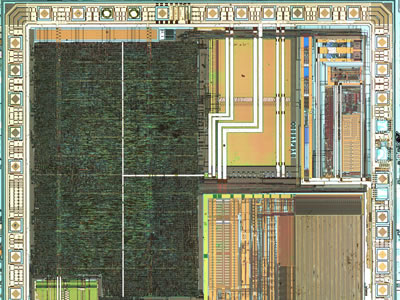
Decapsulation plus internal probe attack for high‑security lockbit. Target fuse cells and internal bus signals for deep security bypass.

Firmware Readout Service

Dump Flash, EEPROM, option bytes after unlock. Output Intel HEX and raw BIN files with basic data verification report.

What is Microcontroller Unlock Service

Microcontroller unlock is a specialized hardware security service targeting locked embedded microcontroller chips. Most modern microcontrollers implement lockbit or security fuse protection after customer firmware programming. This security mechanism blocks standard debug interfaces and prevents ordinary readout of internal flash memory. Once the lock bit is activated, users cannot read original hex or bin firmware via SWD, JTAG or UART bootloader.

Many scenarios require retrieving locked firmware from existing physical MCU samples. Original firmware files may be lost after long‑term equipment maintenance. Old industrial devices have no available source code or firmware backup. Reverse engineering researchers need original binary data for hardware analysis. Device repair engineers require firmware to restore bricked embedded hardware. Our microcontroller unlock service provides physical and semi‑invasive solutions to bypass these security restrictions. Different MCU families adopt different protection mechanisms and lockbit layouts. Some chips use software‑based security layers while others rely on silicon‑level fuses. We evaluate each chip model and package to select the most suitable unlocking approach. Common technical paths include fault injection, voltage glitching, clock glitching, and physical decapsulation‑based attacks.

Firmware Extraction

Each unlocking workflow respects the physical limits of the target integrated circuit. Non‑invasive methods try to preserve chip electrical functionality after operation. Semi‑invasive approaches may require partial package opening for internal signal probing. Fully invasive decapsulation solutions target extremely high‑security locked MCUs. After successful unlock, we can dump full flash memory, eeprom data and option bytes. Delivered files include raw binary, intel hex format and chip configuration register data. We verify the dumped firmware integrity before returning deliverables to customers. Unlock success rate varies depending on silicon revision, security version and package condition. Newer generations of MCUs with advanced hardware protection bring higher technical challenges. We keep updating our hardware platforms for newly released microcontroller families. This service is intended exclusively for legitimate hardware research and authorized device repair. Customers must hold legal rights over the target hardware submitted for processing. Microcontroller unlock fills an important gap for embedded hardware recovery work. It helps engineers rescue valuable firmware when original project files are missing. It supports security audit work for embedded product vulnerability assessment. It also assists education‑oriented embedded system reverse‑engineering laboratory projects. Every sample goes through pre‑processing evaluation to estimate feasibility and risk. We clearly inform customers about possible risks of chip damage before starting work. No unlocking result can be one‑hundred‑percent guaranteed for every silicon version. Our team accumulates large practical experience across thousands of MCU unlock cases. We support both single prototype samples and small‑batch engineering sample processing. All dumped data will be kept confidential according to project non‑disclosure requirements. We will not retain copies of customer firmware without explicit permission. After finishing unlock tasks, physical samples and data files will be returned to clients. Microcontroller unlock is a powerful technical tool for embedded hardware community.

Supported Microcontroller Families

Major mainstream 8‑bit / 32‑bit embedded MCU series for unlock and firmware dump.

STM32 Series

Cortex‑M0 M3 M4 M7, STM32F1,F4,L4,G0,G4 etc.

8051 Core MCUs

Atmel AT89, Cygnal, STC, Winbond 8051 devices.

PIC Microcontrollers

PIC12, PIC16, PIC18 series lockbit unlock support.

AVR Mega

ATmega series lock‑bit bypass and firmware dump.

RISC‑V MCUs

CH32V, GD32V and other RISC‑V based microcontrollers.

GD32 Series

GD32F1, GD32F4 compatible Cortex‑M microcontrollers.

Silicon Labs C8051

C8051F series security fuse analysis and unlock.

Other IC

Submit your part‑number for feasibility assessment.

Unlock Techniques & Expertise

We combine hardware-level expertise with software techniques to extract firmware reliably and with minimal risk to your device.


01

Debug Interface Bypass

Accessing on-chip debug interfaces (JTAG, SWD, OCD, UPDI, ICSP, debugWIRE, BDM) and exploiting known security vulnerabilities to bypass read-protection mechanisms at the hardware level.

02

Protection Level Downgrade

Leveraging documented and semi-documented silicon errata to transition read-protection from level 1 back to level 0 — recovering flash contents without physical modification.

03

Voltage & Clock Glitching

Precision fault injection — transient voltage drops or clock glitches timed to skip security check instructions during boot sequences, granting memory access for a single read cycle.

04

Bootloader Exploitation

Analyzing factory and user bootloaders (USART, USB, CAN, I2C) to find authentication bypasses, buffer overflows, and side-channel entry points that expose protected flash regions.

05

Semiconductor‑Level Decapsulation

For the most hardened targets, we perform chemical or mechanical decapsulation to expose the die, enabling microprobing and focused ion beam (FIB) attacks — performed by partner labs.